Home renovation budgets have a way of growing faster than anyone plans for. Most of the overruns people expect, surprise rot behind the walls, a plumbing issue that couldn’t wait, materials that cost more than the estimate. What most homeowners don’t see coming is the money they lose on the dumpster.
It sounds like a minor detail. You need somewhere to put the debris, you rent a bin, done. But getting the dumpster wrong, whether that’s the size, the type, or how you load it, is one of the fastest ways to add unexpected costs to a renovation that’s already stretching the budget.
Here’s what actually costs people money, and how to avoid it.
Paying for a Bin That’s Too Small
The most common mistake is underestimating how much space renovation debris actually takes up. A bathroom remodel sounds manageable until you’re staring at a demolished vanity, a toilet, a cast iron tub, busted tile, and a pile of drywall that somehow expanded to three times its original size.
When a dumpster fills before the project does, you have two options: pay for an early pickup and a second delivery, or wait for the first bin to be hauled away before the work can continue. Either way, you’re paying extra fees and potentially losing days on your timeline.
Debris doesn’t pack the way people expect. Cabinets are boxy and full of air pockets. Unless you break them down completely, they consume space at a surprising rate. Carpet rolls up but expands once cut and tossed. Drywall fragments rather than stacking. The mental image of “how much stuff is this, really” almost always undershoots reality.
Paying for Empty Air
Going too large has its own cost. Dumpster rental rates scale with size, and a 40-yard container for a single bathroom remodel means you’re paying premium rates for space you’ll never use. That money could have gone toward fixtures, lighting, or finishing materials.
The fix is understanding what each project type actually generates before you rent:
- Small bathroom remodel (40–70 sq. ft.): A 10-yard dumpster handles everything, including the toilet, vanity, tub, and flooring
- Kitchen overhaul (150–300 sq. ft.): A 20-yard container accommodates awkward cabinet shapes and countertop lengths
- Whole-house flooring tear-out (1,500–2,500 sq. ft.): A 20-yard works for a few rooms; a 30-yard for multiple materials across the whole house
- Deck demolition (200–400 sq. ft.): A 20-yard is necessary mainly for the length, so full boards don’t need to be cut in half
- Multi-room renovation or addition: Budget for a 30- or 40-yard; scope creep is almost guaranteed
The Weight Trap: The Fee Most People Never See Coming
This is where renovation budgets take the biggest unexpected hit, and it’s the detail that catches almost everyone off guard.
Dumpster pricing is based on volume, but dumpsters also have weight limits. When you exceed that limit at the landfill, you pay an overage fee on every ton over the threshold. Depending on your location and the rental company, those fees add up quickly.
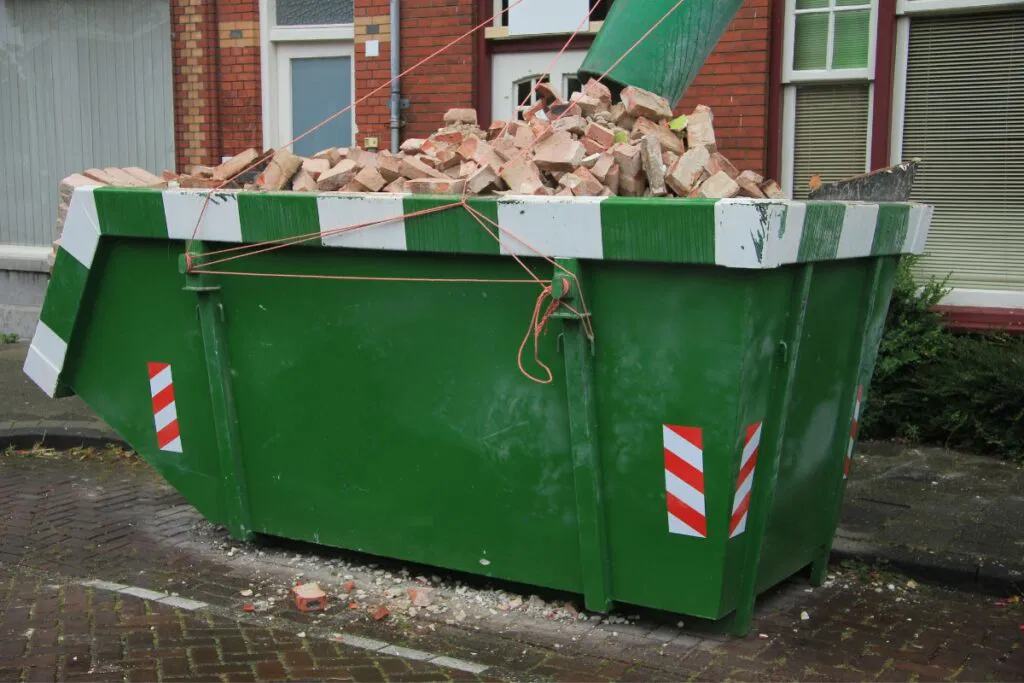
The problem is that certain materials are deceivingly heavy. A dumpster that looks half full of tile, brick, concrete, or wet drywall can easily exceed its weight limit before it’s anywhere near visually full. A truck that can’t safely lift an overloaded bin won’t haul it, which means delays, reloading, and additional charges.
For projects generating heavy inert waste like concrete, brick, or ceramic tile, the smarter move is to rent a smaller dumpster specifically designated for inert materials. These containers have lower sides by design, making it physically difficult to overload them.
For mixed jobs like a kitchen renovation with tile flooring, load heavy materials flat on the bottom first, then layer lighter, bulkier debris on top. This distributes weight more evenly and reduces the risk of hitting the limit before the bin is full.
Scope Creep: The Cost You Can’t Fully Plan For

Renovations rarely go exactly as planned. You open a wall and find water damage. You pull up carpet and decide the subfloor needs replacing. You were only doing the kitchen but the adjacent hallway now looks terrible by comparison.
This is scope creep, and it’s nearly universal in home renovation. The financial impact on your dumpster rental is direct: a bin sized for the original plan doesn’t account for the work that gets added along the way. A second rental, especially a rush order mid-project, costs more than sizing up from the start.
If you know yourself, and you know how renovations tend to go, budget for one size larger than your initial estimate suggests. The marginal cost difference between a 20-yard and a 30-yard container is almost always less than the cost of a second haul.
The Driveway Problem
A damage cost that homeowners frequently overlook is what a heavy dumpster does to the surface it sits on. Full roll-off containers are substantial weight concentrated on a small contact area. Older concrete driveways crack. Pavers shift or chip. Asphalt can dent permanently.
The fix is simple but easy to forget: place two thick boards or sheets of plywood under the wheels before the bin is set down. It distributes the weight and protects the surface underneath. Skipping this step on a freshly sealed driveway or older concrete can turn a free precaution into a costly repair.
Weather and the Weight It Adds
If rain is in the forecast during your project, toss a tarp over the open dumpster. Wet carpet, insulation, and drywall absorb water and gain significant weight. A bin that was well within its weight limit on a dry day can exceed it after a heavy rain, triggering those same overage fees. A basic tarp costs almost nothing and takes two minutes to secure.
What You Can’t Put in the Bin
Disposing of prohibited materials, either accidentally or assuming it won’t matter, creates real problems. Rental companies and landfills prohibit:
- Batteries and electronics
- Paint and solvents
- Tires
- Refrigerants and Freon
- Asbestos-containing materials
- Oils and flammable liquids
If prohibited materials are found in the bin, you can be charged disposal fees significantly higher than the rental itself. For renovations in older homes where asbestos is a possibility, have materials tested before demo begins. Disposing of it improperly is both costly and a genuine health risk.
One Rule That Prevents Multiple Problems
Whatever size you rent, keep debris below the fill line. Material stacked above the rim isn’t just a safety issue on the road; most drivers won’t legally haul an overloaded bin. If the truck arrives and your dumpster is piled high, you’ll pay for the trip and still need to remove the excess before it can be taken.
The Bottom Line
The dumpster is the least exciting part of any renovation, but the decisions around it have a direct impact on your budget and your timeline. Sizing too small costs you in fees and delays. Sizing too large wastes money on empty space. Ignoring weight limits leads to overage charges. Skipping weather protection or surface precautions creates problems that outlast the project.
Getting it right isn’t complicated once you know what to look for. Understand your debris type, account for the weight, leave room for scope creep, and protect the surface it sits on.
IronClad Site Services offers dumpster rentals in a range of sizes. Call 1-801-382-9956 or email icssutah@gmail.com.